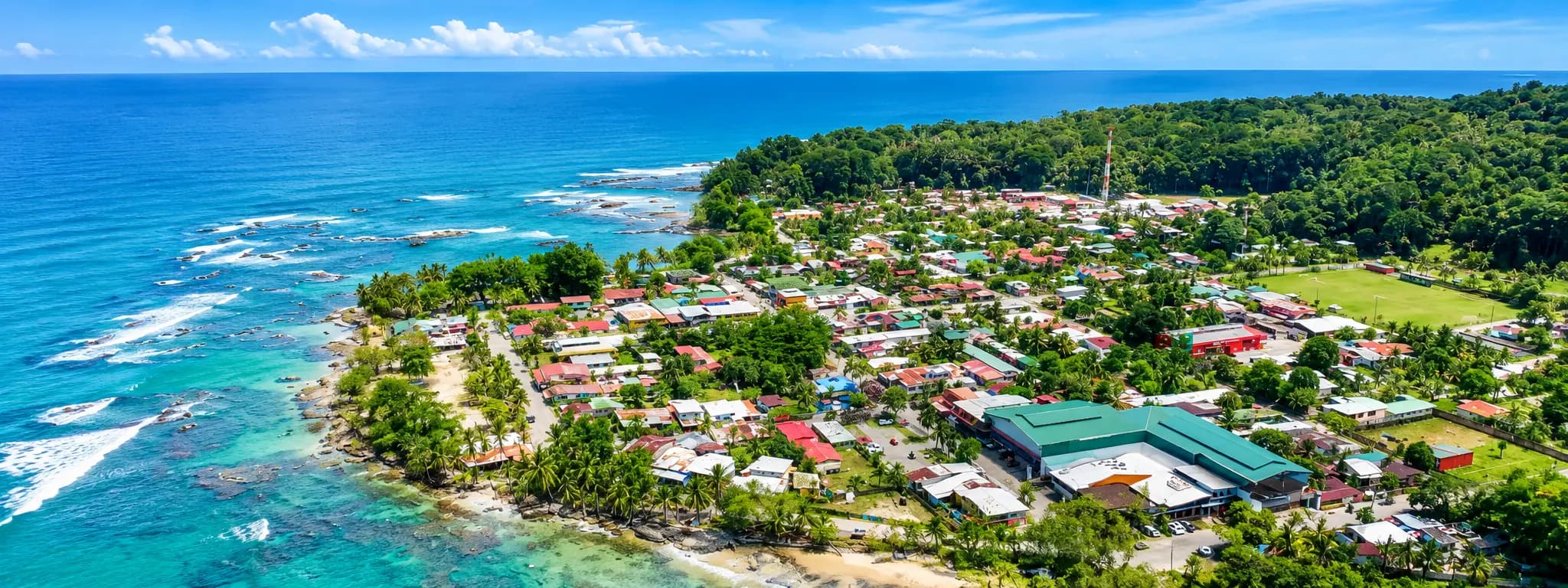
September and October are Costa Rica's wettest months, and the rain changes how long every drive takes. Here is the real drive time for each major route, which roads actually get harder, and the one region that is at its best while the Pacific is soaked.
Most articles about traveling to Costa Rica in September and October argue about whether you should come at all. That is not a useful question if you already booked the flight. The useful question is narrower and nobody answers it: how much longer is the drive going to take, and which roads should you actually be careful about? Drive times are the part of a rainy-season itinerary that quietly falls apart. You plan a transfer the way you would in February, the afternoon storm rolls in over the mountains, and suddenly you are arriving at your hotel in the dark on a road you have never seen. This guide is the drive-time answer, route by route, plus the honest version of which routes get harder and which ones barely notice.
What the Rain Actually Does in September and October
September and October are the wettest months on Costa Rica's Pacific side. That is the real pattern, not marketing softening. But the shape of the rain matters more than the total. On most days it does not rain from morning to night. Mornings are frequently clear and bright, clouds build through midday, and the serious rain arrives in the afternoon, often between two and five o'clock. That pattern is the single most useful planning fact in this entire article, because it means the rain is schedulable. A transfer that leaves at eight in the morning is a completely different trip from the same transfer leaving at three in the afternoon.
The second thing the rain does is change the road surface rather than the road itself. Costa Rica's main highways are paved and drain reasonably well. What changes is traction on the mountain sections, visibility when a cloud sits on the road at altitude, and the occasional river crossing or landslide on secondary routes. Almost none of that affects the big paved corridors. Nearly all of it affects the same three or four stretches every year, and locals know exactly which ones they are.
The rain in September and October is not a wall you drive through. It is a schedule you drive around.
Drive Times for Every Major Route
Below are the standard drive times we run these routes in year-round, followed by the buffer we plan for in September and October. To be clear about what that buffer is: it is a planning allowance based on how these roads behave in heavy afternoon rain, not a measured average. Some days you will arrive on the normal schedule. The buffer exists so that when you do not, your afternoon is not ruined.
From San José Airport (SJO)
- SJO to La Fortuna (Arenal): about 3 to 3.5 hours normally. Add 30 to 45 minutes in heavy afternoon rain. The climb out of the Central Valley and the descent toward San Ramón are where the time goes.
- SJO to Jacó: about 2 to 2.5 hours door to door. Add 20 to 30 minutes. This is the most rain-resistant major route in the country — Route 27 is a modern toll highway almost the entire way.
- SJO to Manuel Antonio / Quepos: about 3 to 3.5 hours. Add 20 to 30 minutes. Route 27 again for the first half, then a flat coastal highway.
- SJO to Tamarindo: about 4.5 to 5 hours. Add 30 to 45 minutes. Long but mostly flat and paved via the Interamericana.
- SJO to Monteverde: budget generously. The final ascent is the single most weather-sensitive stretch on any common tourist route in Costa Rica.
- SJO to Puerto Viejo (Caribbean): about 4.5 to 5 hours. Add little to nothing — and read the Caribbean section below, because this route is the plot twist of the whole season.
From Liberia Airport (LIR)
- LIR to Tamarindo: about 1 to 1.5 hours. Add 15 minutes. Short, paved, and largely unbothered by rain.
- LIR to Papagayo: under an hour. Essentially unaffected.
- LIR to La Fortuna: a half-day drive that crosses from dry Guanacaste into the wet northern lowlands, so this is a route where the weather genuinely changes underneath you mid-trip.
- LIR to Río Celeste: one of the most-searched drives in Guanacaste, and one of the few where September and October actively work in your favor. More on that below.
- LIR to Nosara or Sámara: the last stretch to both towns is where Guanacaste's unpaved sections live. This is the Guanacaste route that most deserves a local driver in the rainy months.
Between Destinations
- La Fortuna to Monteverde: about 2 hours. This is the classic Costa Rica connection and the one most affected by rain, because both ends are at altitude and the middle is mountain road.
- La Fortuna to Tamarindo: about 3.5 to 4 hours. Add 30 minutes. You are driving from the country's wettest region into its driest, so it is common to start this drive in rain and finish it in sun.
- La Fortuna to Jacó: about 3.5 to 4 hours. Add 30 minutes.
- La Fortuna to Puerto Viejo: about 6 to 7 hours. The single best weather trade in the country during these two months.
- Monteverde to Manuel Antonio: about 3 hours, with the Monteverde descent being the sensitive part.
- Manuel Antonio to SJO Airport: about 3 hours. Reliable.
- Puerto Viejo to SJO Airport: about 4.5 to 5 hours, over the mountain pass through Braulio Carrillo — a stretch where fog matters more than rain.
The Three Roads That Actually Get Harder
Being honest about this is more useful than reassurance. Most of Costa Rica's tourist routes are fine in the rain. A small number are meaningfully harder, and they are the same ones every year.
The Monteverde ascent is first and it is not close. The road climbs into a cloud forest, which means that by definition you are driving into cloud. Visibility can drop to a few car lengths, the last stretch is steep, and sections of it are rough. This is the route where the difference between a driver who has done it two hundred times and a rental car with a phone on the dashboard is most obvious.
Second are the unpaved final approaches in Guanacaste — the last stretches into Nosara, Sámara and some of the smaller beaches. These are perfectly manageable roads in the dry season and become genuinely rutted and slick after sustained rain. They are also where rental-car travelers most often discover that their insurance and their vehicle were not chosen with September in mind.
Third are secondary river crossings on rural routes, mostly relevant if you are heading somewhere off the main corridors. These are the ones where local knowledge is not a nice-to-have. A driver who works these roads daily knows which crossing is running high today and which alternate route to take, and will simply reroute without making it your problem. This is the practical argument for a private transfer in the rainy season, and it is a more honest one than 'comfort.'
The Caribbean Flip: The Thing Almost Nobody Tells You
Here is the piece of information that can rescue an entire September or October itinerary. Costa Rica does not have one rainy season. It has two coasts with opposite weather calendars. While the Pacific side is having its wettest stretch of the year, the Caribbean coast — Puerto Viejo, Cahuita, Tortuguero — is having one of its driest and best. September and October are, for the Caribbean, close to the ideal window.
This is not a consolation prize. It is a genuinely better trip for a lot of travelers: calmer water, warm afternoons, a completely different culture and food from the Pacific side, and a fraction of the crowds. If your dates are locked and you have not booked every night yet, moving a few nights of your itinerary from the Pacific to the Caribbean is the highest-leverage change you can make. SJO to Puerto Viejo runs about 4.5 to 5 hours, and La Fortuna to Puerto Viejo about 6 to 7 — meaning the flip is one transfer away from wherever you already are.
Traveling in September or October? The Caribbean is having its best weather of the year while the Pacific is at its wettest.
See Caribbean transfer routesWhat Gets Better in the Rain
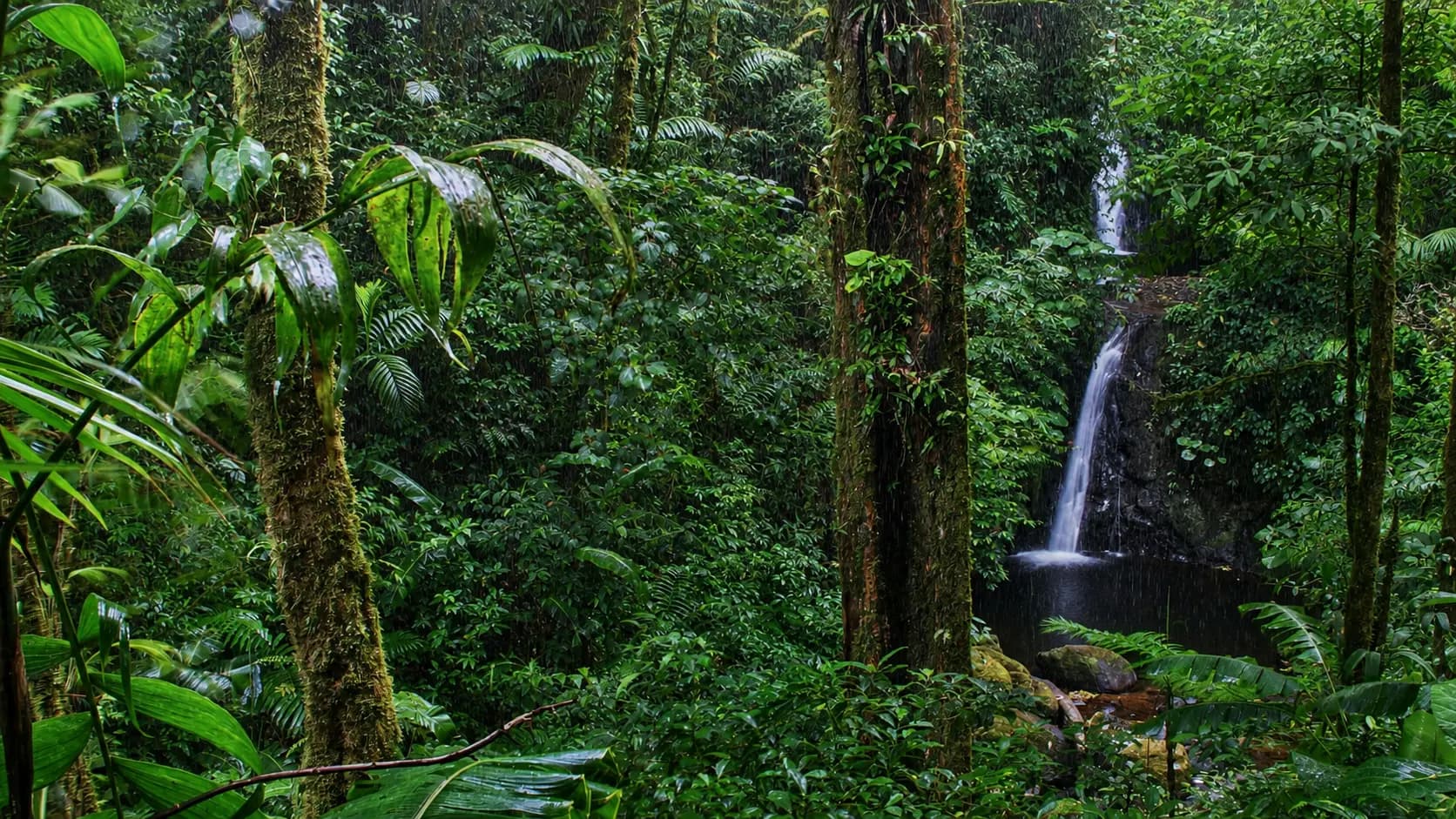
The waterfalls are the obvious one, and they are not a small thing. Falls that are a thin ribbon in April are thundering by September. Río Celeste — the surreal turquoise river in Tenorio Volcano National Park — is at its most dramatic in exactly these months, because the color and the volume both depend on the water. If there is one thing to add to a rainy-season itinerary that you would skip in the dry season, it is this one. The drive from Liberia airport is one of the most-searched routes in the region, and it is also one of the few where showing up in the wettest months is an advantage rather than a compromise.
Beyond the water, the country is at its greenest, wildlife is more active with food abundant, and there are dramatically fewer people everywhere you go. Prices across accommodation and tours are at their lowest point of the year. If your tolerance for an afternoon downpour is reasonable, September and October buy you a version of Costa Rica that the February crowds never see.
How to Actually Plan the Days
- Move your transfers to the morning. This is the whole game. A 7am or 8am departure usually beats the weather entirely.
- Do not schedule a long drive and a sunset activity on the same day. Pick one.
- Put your outdoor activities — volcano hikes, waterfalls, zip lines — in the morning block, and save the afternoon for hot springs, food, or the pool, which are all better in the rain anyway.
- Build one flexible day into the itinerary. Not because everything will go wrong, but because one afternoon probably will, and a schedule with no slack turns that into a cascade.
- If your route includes Monteverde or an unpaved final approach, this is the trip to let someone else drive.
- Pack for warm rain, not cold rain. It is 26°C. You want a light rain jacket and quick-dry clothing, not a winter shell.
Thinking of moving those nights to the Caribbean? Here is what Puerto Viejo is actually like in October: weather, beaches, the Limón Carnival and every way to get there from San José.
Read the Puerto Viejo in October guideGreen Season Discount: 5% Off Automatically, 10% With a Code
We run fewer transfers in September and October than in any other part of the year, and we would rather run them full than idle. So for travel dates between September 1 and October 31, 2026, every private transfer is automatically 5% off. You do not need to do anything — book normally and the discount is already applied on the checkout summary before you pay.
If you found this guide, you can do better than that. Use the code GREENSEASON at checkout and the discount goes to 10% on any transfer with a travel date in that window. At checkout, look for 'Have a discount code?' just above the total, enter GREENSEASON, and the new total updates before you confirm anything. The discount applies to the transfer itself; optional add-ons stay at their normal price.
Use code GREENSEASON for 10% off any transfer between September 1 and October 31, 2026.
Book your transferFrequently Asked Questions
How much longer do drives take in Costa Rica during the rainy season?
On the main paved corridors, plan for roughly 20 to 45 extra minutes in heavy afternoon rain. Routes like SJO to Jacó or Liberia to Tamarindo are barely affected because they run on modern paved highway. Mountain routes — particularly anything involving Monteverde — are where real delays happen, and where the extra time is worth planning for rather than hoping against.
Is September or October a bad time to visit Costa Rica?
They are the wettest months on the Pacific side, and they are also the cheapest, greenest and least crowded. The rain is usually concentrated in the afternoon rather than falling all day, so mornings are typically usable for activities. If your itinerary is Pacific-heavy and your dates are fixed, moving part of the trip to the Caribbean coast — which is having its best weather in exactly these months — turns the season from a compromise into an advantage.
Do roads flood in Costa Rica in September and October?
Main highways rarely flood in a way that stops travel. What does happen is reduced traction on mountain roads, fog at altitude, rutted conditions on unpaved final approaches to some beach towns, and occasional high water at rural river crossings. Local drivers know which crossings and stretches are affected on a given day and reroute around them, which is the practical reason a private transfer is worth more in these two months than in any others.
Which airport should I fly into during the rainy season?
The same one you would otherwise: SJO if your itinerary centers on La Fortuna, Manuel Antonio, Jacó or the Caribbean, and Liberia (LIR) if you are staying in Guanacaste. Rain does not change which airport is closest. It does make the drive from the airport more worth handing to someone else, especially if your destination is Monteverde or a beach town with an unpaved final approach.
Is Río Celeste worth visiting in the rainy season?
It is arguably the best time to go. The waterfall's volume and the river's turquoise color both depend on water, so September and October show it at its most dramatic — the opposite of the dry-season experience, when it can run thin. The trail will be muddy, so wear proper shoes and go in the morning.
How does the Green Season discount work?
Any private transfer with a travel date between September 1 and October 31, 2026 automatically gets 5% off the transfer price — no code needed, applied on the checkout summary before payment. Entering the code GREENSEASON at checkout raises it to 10%. The discount applies to the transfer price; optional add-ons are not discounted. It is based on your travel date, not your booking date, so booking early does not cost you the discount.
September and October are not the months to fight Costa Rica's weather. They are the months to plan around it — drive in the morning, keep one day loose, put the waterfalls at the center of the trip instead of the beaches, and consider letting the Caribbean carry a few nights of the itinerary. Do that and you get the country at its greenest, its emptiest and its cheapest, with the falls running harder than any of the February crowds will ever see them.