While the Pacific coast is at its wettest, Puerto Viejo de Talamanca on the Caribbean side is having its driest, calmest weeks of the year. Here is what October is really like there, which beach to pick, the Limón Carnival, safety, the 4.5-hour drive from San José, and the 5% Green Season discount on every private transfer through October 31.
Puerto Viejo de Talamanca sits on Costa Rica's southern Caribbean coast, in Limón province, 215 km and about 4.5 to 5 hours by road from San José airport (SJO). October is its best month: while the Pacific side is having its rainiest weeks, the Caribbean is in its own short dry season, the sea goes flat enough to snorkel the reefs at Cahuita and Punta Uva, and the town is quieter than at any other point in the year. This guide covers what the weather actually does, which beach suits which traveler, the Limón Carnival around October 12, how safe it is, every way to get there from San José, and the 5% Green Season discount we apply automatically to any private transfer with a travel date between September 1 and October 31, 2026.
Puerto Viejo at a Glance
- Where: Puerto Viejo de Talamanca, Limón province, southern Caribbean coast of Costa Rica, about 45 minutes north of the Panama border at Sixaola.
- Closest airport: San José (SJO), 215 km, 4.5 to 5.25 hours by road. Liberia (LIR) is on the wrong side of the country, 7 to 8 hours away. Limón has a small domestic airstrip about an hour north of town.
- Best months: September and October, then February to April. The wettest stretch is late November through January, with a second wet spell in June and July.
- Temperature: 25 to 31°C by day, warm nights, sea around 28°C. Humid all year.
- Language and money: English is widely spoken alongside Spanish, thanks to the town's Afro-Caribbean roots. US dollars are accepted almost everywhere, but carry colones for buses, sodas and small purchases. There are only a couple of ATMs in town and they do run out of cash on holiday weekends.
- Not to be confused with: Puerto Viejo de Sarapiquí, an inland river town in Heredia province, three hours from the coast. Buses and shared shuttles to both towns can simply say 'Puerto Viejo'. If you are heading for the beach, you want Puerto Viejo de Talamanca, or 'Puerto Viejo de Limón' as Costa Ricans call it.
Why October Is the Best Month to Visit Puerto Viejo
Costa Rica does not have one rainy season. It has two coasts with opposite calendars. The Pacific side, where most of the country's tourism lives, gets its heaviest rain in September and October. The Caribbean coast does the opposite: those same two months are its most reliable stretch of sunny mornings, calm sea and dry afternoons. Locals call it the Caribbean summer, or veranillo. It is not a marketing invention. If you look at any rainfall chart for Limón province, September and October are the two lowest bars of the year.
The practical consequences are what matter. First, the sea. For most of the year the southern Caribbean has real swell, which is why Salsa Brava in front of town is one of the heaviest waves in the country from December to March. In September and October that swell disappears. The water at Punta Uva, Manzanillo and inside Cahuita National Park turns glassy and clear, and snorkeling, which is genuinely hit-or-miss here in other months, becomes the thing to do. Second, the crowds. October is low season for Costa Rica as a whole, so hotels have space, restaurants have tables, and the beaches south of town are close to empty on a weekday. Third, prices. Lodging on the Caribbean coast runs well below its December to March rates in October, and our own transfers are 5% off for the same reason.
Two honest caveats. This is still a rainforest coast, so you can get a shower on any given day, usually short, usually at night or in the late afternoon. And the window closes fast: from mid November the rain comes back, and December, which is peak season on the Pacific, is actually the wettest month of the year in Puerto Viejo. If your dates are flexible, the first three weeks of October are the sweet spot.
In October the country's weather map flips. The rain you are trying to escape on the Pacific is exactly what makes the Caribbean the place to be.
The Beaches, North to South
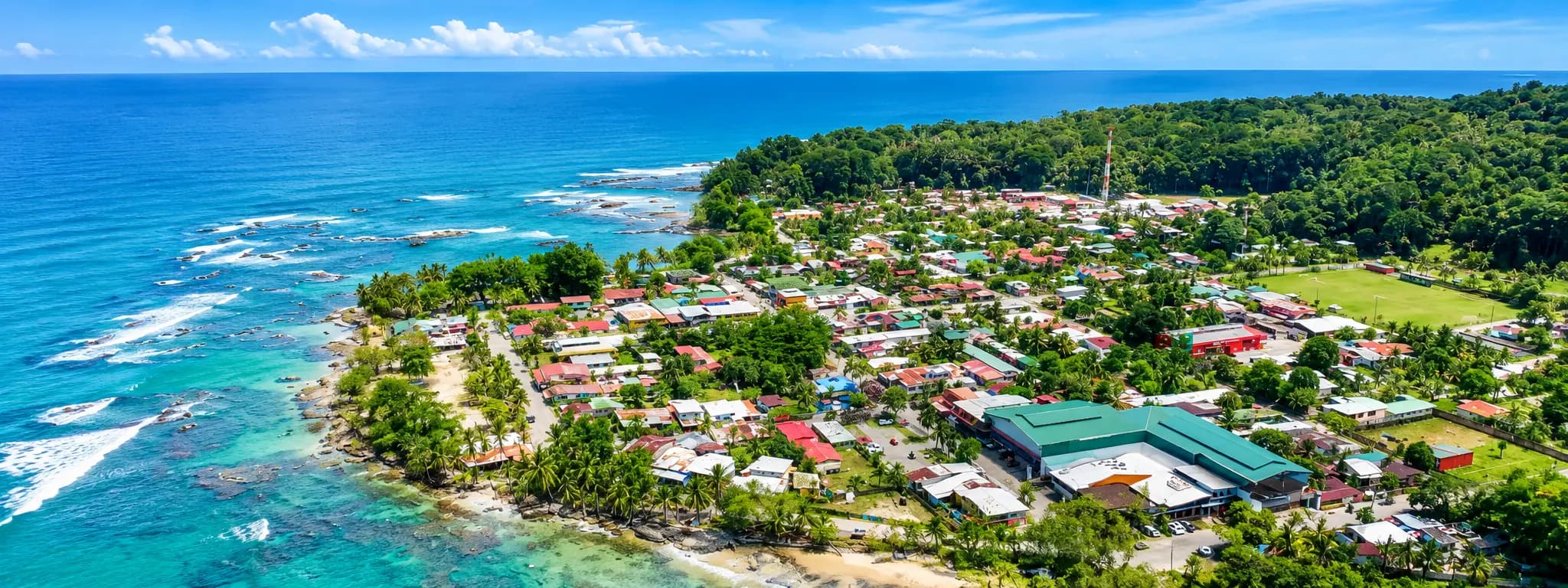
Puerto Viejo is not one beach. It is a 15 km string of them along a single flat coastal road, and where you stay decides what kind of trip you get. Here they are in order, heading south from town.
- Playa Negra (north edge of town): black volcanic sand, calm water, quiet. The choice for travelers who want to walk into town for dinner but sleep somewhere silent.
- Playa Puerto Viejo and Salsa Brava (town): the beach in front of the village, with the famous reef break offshore. In October the wave is flat and the town beach is for swimming and watching the fishing boats. This is where the bars and restaurants are.
- Playa Cocles (2 km south): the surf-lesson beach, with lifeguards on duty and the best beach bars. Long, golden, lively on weekends, and the most popular stretch for a first-timer.
- Playa Chiquita (4 to 5 km south): a series of small jungle-backed coves rather than one long beach. Rock pools, shade, and the area's boutique lodges. The Jaguar Rescue Center is here.
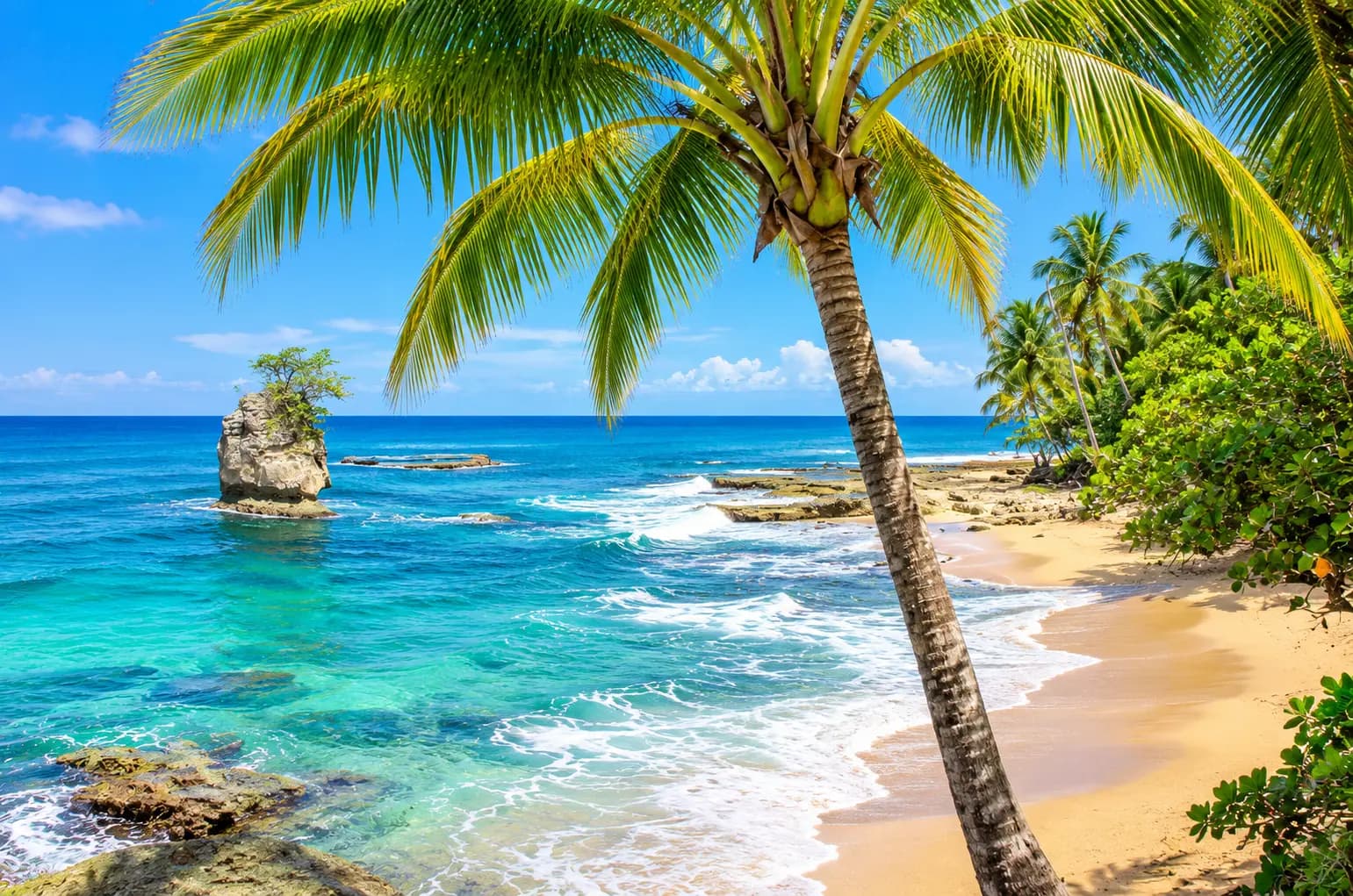
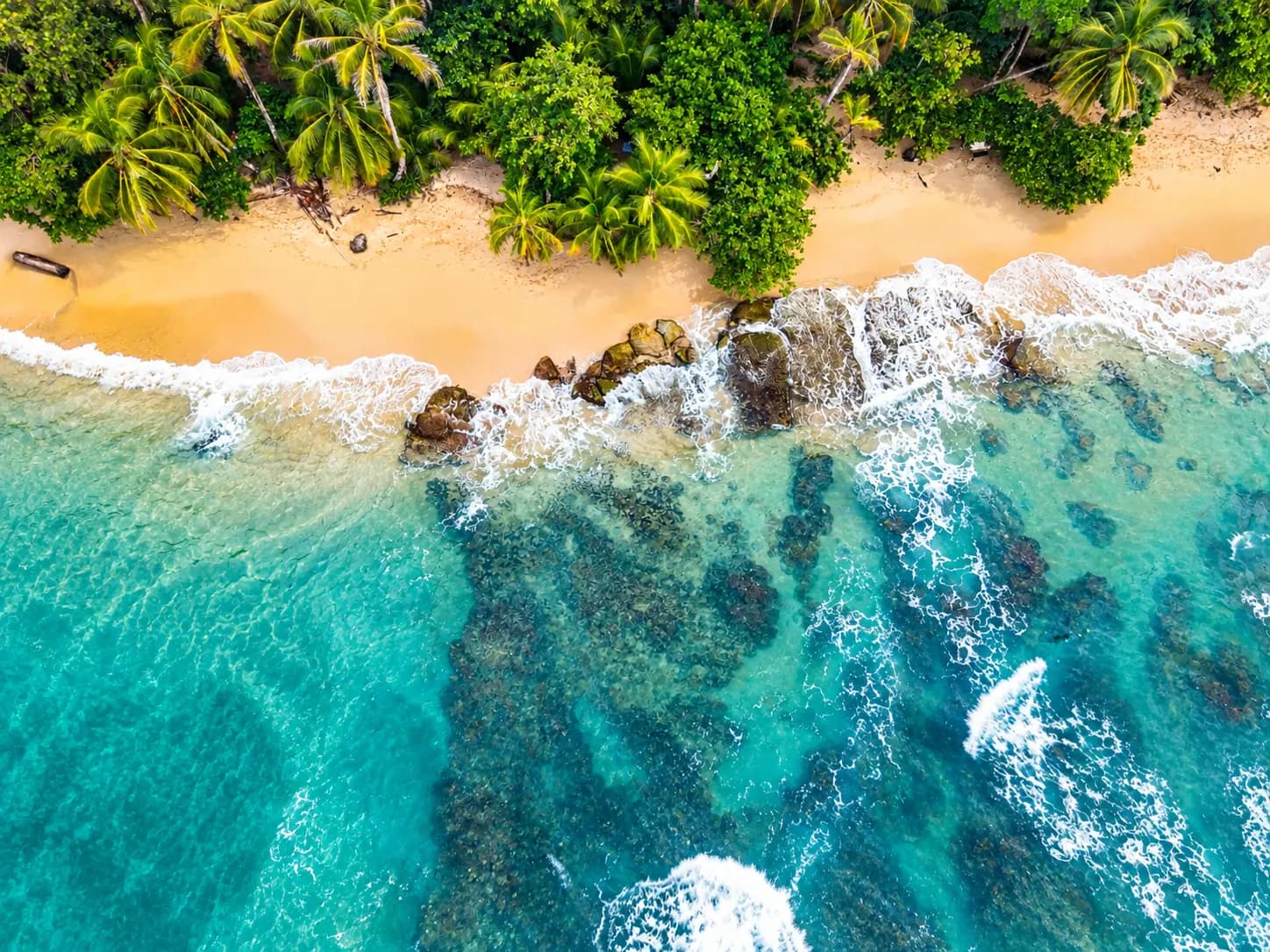
- Punta Uva (7 to 8 km south): the postcard. Ivory sand, aquamarine water, tall palms, and the Arrecife side where you can snorkel straight off the beach in October. If you only visit one beach, make it this one.
- Manzanillo (13 km south, end of the road): a fishing village where the Gandoca-Manzanillo Wildlife Refuge begins. A wide beach, a shallow reef offshore, and the trail into the refuge for monkeys, sloths and, with luck, the great green macaws that a local project is bringing back.
- Cahuita (16 km north, about 20 minutes): a smaller, sleepier village with its own national park, where an easy 8 km trail runs along the beach through sloth and monkey territory. Worth a full day.
Things to Do in Puerto Viejo in October
- Snorkel Cahuita National Park. The park protects the largest reef on Costa Rica's Caribbean coast, and by law you snorkel it with a licensed guide by boat. October is the month guides actually recommend, because the visibility that is poor for much of the year is at its best.
- Walk the Cahuita trail. Flat, shaded, 8 km from the Kelly Creek entrance in Cahuita village to Puerto Vargas, with the beach on one side and rainforest on the other. Sloths, howler and capuchin monkeys, raccoons, and the occasional snake. Kelly Creek works on a donation basis; the Puerto Vargas entrance charges a small fee. Go early, before 8 am, for the wildlife.
- Jaguar Rescue Center in Playa Chiquita. A wildlife rehabilitation center that runs guided visits in the morning (around $25 per person, book ahead). Sloths, monkeys, toucans and the back-story of how each animal got there. The single best activity for families.
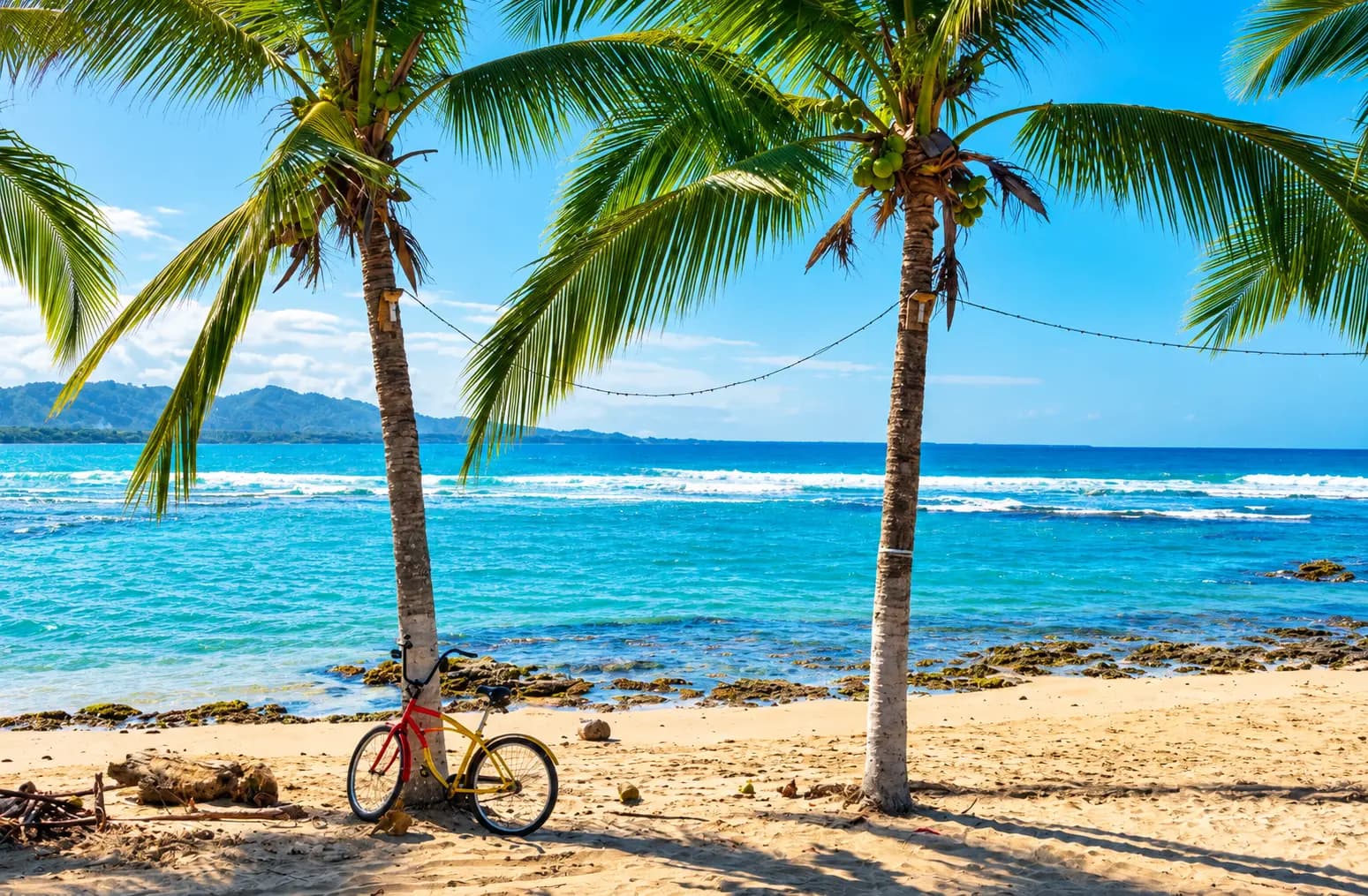
- Rent a bike. This is how the coast works. The road from town to Manzanillo is flat and paved, bikes cost roughly $6 to $10 a day from any hotel, and a beach-to-beach ride with stops for coconut water and a swim is the best day you will have here. Bring lights if you will be out after dark.
- Chocolate tour. The Talamanca region grows some of Costa Rica's best cacao, and several small farms between Cocles and Bribri run bean-to-bar tours where you roast, grind and taste. Good in the rain, if you get some.
- Visit a Bribri indigenous community. Half-day and full-day tours go inland to the Talamanca foothills to meet Bribri families, learn how they work cacao and medicinal plants, and swim at the waterfalls near the village of Bribri.
- Kayak the Punta Uva river. A quiet paddle up a jungle river from the beach at Punta Uva, with river turtles, kingfishers, herons and monkeys along the banks. Two hours, no experience needed.
- Gandoca-Manzanillo Wildlife Refuge. Guided or self-guided walks from the end of the road in Manzanillo through coastal rainforest and mangrove. Night walks are available and worth it.
- Tortuguero turtle season. Green sea turtles nest on Tortuguero's beach from July through October, and the nesting tours happen at night with a guide. From Puerto Viejo it is a long day (road to the La Pavona dock, then a boat), so it is better as an overnight. We run a private transfer from Puerto Viejo to La Pavona if you want to add it to the trip.
- Raft the Pacuare on your way out. The Pacuare is one of the best whitewater rivers in the world, and rafting operators will pick you up in Puerto Viejo, run the river, and drop you in San José the same evening. It turns the drive back into the best day of the trip.
The Limón Carnival: The October Event on the Caribbean Coast
October 12 is Día de las Culturas in Costa Rica, a national holiday, and the port city of Limón, an hour north of Puerto Viejo, celebrates it with the biggest carnival in the country: comparsas, calypso, floats, street food and parades that fill the days around the 12th. The exact program is set by the organizers each year, so check the dates once you have your travel window, but historically the celebrations run for close to a week centered on the holiday. In 2026, October 12 falls on a Monday, which means a long weekend for Costa Ricans and the busiest few days of the season on the Caribbean coast.
Two practical notes. If you want to be in Puerto Viejo over that long weekend, book lodging and your transfer early, because the town fills with Costa Rican visitors and the two ATMs run dry. And if you would rather have the empty-beach version of October, aim for the weeks before or after the holiday, when the coast goes back to being very quiet. Puerto Viejo itself does not host the carnival; it stays its laid-back self while Limón city has the party, and a day trip up to see a parade is an easy hour each way.
How to Get to Puerto Viejo from San José (SJO)
There is one road from the Central Valley to the Caribbean coast: Route 32, which climbs over the Braulio Carrillo mountain pass through rainforest, drops to the lowlands at Guápiles, runs to Limón, and then becomes the coastal Route 36 south to Puerto Viejo. It is 215 km and paved end to end. The pass is the only part that deserves respect: it is steep, busy with trucks heading to the port, and afternoon cloud can sit on the road and cut visibility. It is also the stretch that closes, sometimes for hours, after heavy rain brings down a hillside, and in 2026 it has had scheduled daytime lane closures for repair work. When that happens the detour is Route 10 through Turrialba, which adds roughly two hours. This is why the morning of your trip matters more than the day of the week.
- Private transfer: $315 per vehicle for 1 to 5 passengers from SJO to Puerto Viejo, 4.5 to 5.25 hours door to door, any hour of the day, with flight monitoring included. With the automatic 5% Green Season discount on travel dates through October 31, 2026, that is $299.25 for the van, or about $60 per person for a full group. The driver checks the Route 32 status the morning of your trip and adjusts the departure time or the route if the pass is closed. From Puerto Viejo back to SJO it is the same $315.
- Shared shuttle: roughly $55 to $70 per person, fixed departure times (typically one morning and one early-afternoon run), 5 to 6 hours once the hotel pickups around San José are done. Fine for one or two travelers on a budget who can match the schedule.
- Public bus: the MEPE bus from San José's Caribbean terminal, around $12, about 5 hours with a stop in Limón. Several departures a day. Make sure the bus says Puerto Viejo de Talamanca, not Sarapiquí, and keep your bag with you.
- Rental car: 4.5 to 5 hours if the pass is open. A sedan is fine, you do not need a 4x4 for this coast, but factor in the trucks on the 32, the fog, and the fact that you will do the drive twice. Do not drive it at night on your first day in the country.
- Fly: a small domestic flight from San José to Limón, then an hour by road to Puerto Viejo. Schedules are limited and the time saved is smaller than it looks once you add the two airport transfers.
From La Fortuna and the Arenal Volcano, Puerto Viejo is 6 to 7 hours by road, and a private transfer is $385 per vehicle. This is the most common combination for a green-season trip, because it pairs the volcano's waterfalls, which are at full volume in October, with the Caribbean's dry weeks. Our Caribbean and Volcano itinerary chains SJO to Puerto Viejo, Puerto Viejo to La Fortuna, and La Fortuna back to SJO as three private legs for $915. From Liberia airport, Puerto Viejo is 7 to 8 hours and does not make sense as a direct transfer; fly into San José instead.
SJO Airport to Puerto Viejo: $315 per van for up to 5 passengers, 5% off automatically for travel dates through October 31, 2026.
See the SJO to Puerto Viejo transferHow Many Days, and Where to Stay
Three nights is the minimum that makes the drive worth it. Four or five is the right number. Puerto Viejo is not a place you tick off; the whole point is the slow rhythm of biking to a beach, swimming, eating, and doing it again somewhere else the next day. Where to stay depends on what you want: the town itself for nightlife and walking to dinner, Playa Negra for quiet within reach of town, Cocles for surf-school energy and beach bars, Playa Chiquita and Punta Uva for jungle boutique lodges and the best swimming, and Manzanillo for the end-of-the-road, nothing-but-the-refuge feeling.
A Four-Day October Plan That Works
- Day 1: Arrive from San José by early afternoon, rent bikes, ride to Cocles for a sunset swim, dinner in town.
- Day 2: Cahuita National Park. Early trail walk from Kelly Creek, then a guided snorkel of the reef while the sea is calm, lunch in Cahuita village, back by mid afternoon.
- Day 3: Jaguar Rescue Center in the morning, chocolate tour or the Punta Uva river by kayak after lunch, late afternoon at Punta Uva beach.
- Day 4: Bike or taxi to Manzanillo, walk into the Gandoca-Manzanillo refuge, swim off the reef, slow lunch at a fishing-village soda, and then either the transfer back to San José or on to La Fortuna.
Is Puerto Viejo Safe?
Yes for the vast majority of visitors, with more petty theft than most other beach towns in Costa Rica. Violent crime against tourists is rare; unattended bags on the beach, bikes left unlocked and phones on restaurant tables are not. The precautions are simple and locals will tell you the same ones: do not leave anything on the sand while you swim, lock the bike, use the hotel safe for passports and cash, take a taxi rather than walking or biking back from town late at night, and skip the unlit jungle path between town and Cocles after dark. Do those things and Puerto Viejo is a relaxed, friendly place where the biggest risk to your day is a coconut.
Practical Tips for October
- Do the outdoor things in the morning. Even in the dry weeks, if a shower comes it comes late in the day.
- Pack a light rain shell anyway, reef-safe sunscreen, strong insect repellent for dusk, a dry bag for the bike basket, and water shoes for the reef.
- Bring cash. Cards work in hotels and the bigger restaurants, but sodas, bike rentals, tour guides and the bus are cash businesses, and the ATMs are unreliable on holiday weekends.
- Book the Cahuita snorkel and the Jaguar Rescue Center a day or two ahead; both cap group sizes.
- If you are combining Puerto Viejo with the Pacific side, put the Caribbean nights in October and the Pacific nights in whichever month you have left. Not the other way around.
- Read our September and October drive-times guide for how the rain changes every other route in the country while the Caribbean stays dry.
Green Season: 5% Off Every Private Transfer Through October 31
September and October are the two months we run the fewest transfers, and we would rather run them full than idle. So every private transfer with a travel date between September 1 and October 31, 2026 is automatically 5% off. There is nothing to enter and nothing to claim: pick your date on the route page and the discounted price shows immediately; it is applied again on the checkout summary before you pay. The discount is based on the travel date, not the booking date, so booking now for an October trip gets it. It applies to the transfer price itself; optional add-ons such as the Discovery upgrade with its stops and meal are at their normal price.
Traveling to the Caribbean coast in September or October? Every private transfer is 5% off for those travel dates.
Book your transfer
Frequently Asked Questions
Is October a good time to visit Puerto Viejo, Costa Rica?
October is the best month. The Caribbean coast has the opposite weather calendar from the Pacific, and September and October are its driest, calmest stretch of the year: sunny mornings, flat clear sea for snorkeling, and low-season crowds and prices. Short showers are still possible, usually late in the day or at night. The rain returns in mid to late November, and December is the wettest month of the year in Puerto Viejo.
Does it rain in Puerto Viejo in October?
Less than in any other month except September. Puerto Viejo is a rainforest coast, so it never goes fully dry, but October rainfall is the lowest of the year and what does fall tends to come as a short late-afternoon or overnight shower rather than a washed-out day. Mornings are reliably usable for beaches, trails and the water.
How far is Puerto Viejo from San José airport (SJO)?
About 215 km, which is 4.5 to 5.25 hours by road via Route 32 over the Braulio Carrillo pass and then Route 36 down the coast. A private transfer from SJO to Puerto Viejo is $315 per vehicle for up to 5 passengers, door to door with flight monitoring; with the Green Season discount for travel dates through October 31, 2026, it is $299.25. A shared shuttle is roughly $55 to $70 per person and the public bus about $12.
What is the closest airport to Puerto Viejo, Costa Rica?
San José (SJO), 4.5 to 5 hours away by road. Liberia (LIR) is on the Pacific side and 7 to 8 hours from Puerto Viejo, so it is the wrong airport for a Caribbean trip. Limón has a small domestic airstrip about an hour north of Puerto Viejo with limited flights from San José.
Is Puerto Viejo de Talamanca the same as Puerto Viejo de Sarapiquí?
No. Puerto Viejo de Talamanca, also called Puerto Viejo de Limón, is the beach town on the southern Caribbean coast that this guide is about. Puerto Viejo de Sarapiquí is an inland river town in Heredia province, about three hours from the coast, known for rafting and rainforest lodges. Buses and shared shuttles from San José can display 'Puerto Viejo' for either, so confirm Talamanca or Limón when you book.
Is Puerto Viejo safe for tourists?
Yes for the large majority of visitors. It has more petty theft than most Costa Rican beach towns, so the standard precautions matter: never leave bags on the beach while swimming, lock your bike, keep passports and cash in the hotel safe, take a taxi back from town late at night, and avoid the unlit path between town and Playa Cocles after dark. Violent crime against tourists is rare.
How many days do you need in Puerto Viejo?
At least three nights, given the 4.5 to 5 hour drive from San José. Four or five nights lets you do Cahuita National Park, the Jaguar Rescue Center, a snorkel or kayak trip, a chocolate or Bribri tour and still have beach days at Punta Uva and Manzanillo without rushing.
Can you snorkel in Puerto Viejo in October?
October and September are the best months for it. The southern Caribbean has real swell most of the year, which stirs up the water, but in these two months the sea goes flat and visibility on the reefs at Cahuita National Park, Punta Uva and Manzanillo is at its best. Cahuita's reef must be snorkeled with a licensed guide by boat; Punta Uva and Manzanillo can be done from the beach.
When is the Limón Carnival in 2026?
The Limón Carnival is held around Día de las Culturas, the October 12 national holiday, in the port city of Limón, about an hour north of Puerto Viejo. In 2026 October 12 falls on a Monday, so expect a long weekend and the celebrations to cluster in the days around it. The organizers publish the final program each year, so confirm the exact dates before you fix your travel plans, and book lodging and transfers early if you want to be on the coast that weekend.
Do I need a 4x4 to visit Puerto Viejo?
No. The road from San José is paved end to end and the coastal road from Puerto Viejo to Manzanillo is flat and paved. A sedan is fine if you rent. The reasons to let someone else drive are different: the Braulio Carrillo pass on Route 32 is steep, foggy in the afternoon and busy with port trucks, it closes after heavy rain and for scheduled repairs, and most travelers only need a car for the drive in and out, which is exactly what a private transfer covers.
How long is the drive from La Fortuna to Puerto Viejo?
About 6 to 7 hours. A private transfer from La Fortuna to Puerto Viejo is $385 per vehicle for up to 5 passengers. It is the most popular way to combine the Arenal Volcano, whose waterfalls are at full volume in October, with the Caribbean's dry weeks, and it is one of the three legs of our Caribbean and Volcano itinerary.
How does the 5% Green Season discount work?
Any private transfer with a travel date between September 1 and October 31, 2026 is automatically 5% off the transfer price. No code and no form: choose your date on the route page and the discounted price appears, and it is applied again on the checkout summary before payment. It is based on the travel date, not the booking date, so booking today for an October trip qualifies. Optional add-ons are not discounted.
Most people who visit Costa Rica never see the Caribbean coast, and most of the ones who do come in December, when it is raining. October is the month the southern Caribbean is at its best, the month the reef is visible and the beaches at Punta Uva are empty, and it happens to be the month the rest of the country is telling you to stay indoors. Put Puerto Viejo in your October, let us handle the drive over the pass, and you will get the version of this coast that the guidebooks describe and the December crowds never find.