How a 1968 eruption turned a quiet town into Costa Rica's adventure capital - the story of Arenal volcano, its hot springs, and how to visit today.
If you have ever visited La Fortuna, you have probably stood there looking up at Arenal Volcano and thought: what a beautiful, peaceful place. And it is. But that volcano was not always quiet. On July 29, 1968, Arenal erupted with no warning, and it changed everything. It destroyed three villages, took 87 lives, and turned a sleepy farming town into the center of one of the most dramatic volcanic events in Costa Rica's modern history. What happened after that eruption is a story of resilience, reinvention, and transformation. This is how La Fortuna went from a forgotten corner of the northern lowlands to one of the most visited destinations in all of Central America.
Before the Eruption: A Quiet Life in the Shadow of a "Dead" Volcano
Before 1968, nobody thought Arenal was dangerous. In fact, most people did not even consider it a volcano. The locals called it Cerro Arenal, meaning Arenal Hill. It had been dormant for so long — roughly 500 years — that it was covered in thick forest from base to summit. There was no crater visible. No steam. No signs of life beneath the surface. The surrounding area was pure agricultural land. La Fortuna, originally called El Borio, was a small farming community where families grew sugarcane, beans, corn, and raised cattle. The roads were unpaved. There was no electricity. The nearest hospital was hours away. Life was simple, hard, and completely centered around the land.
The towns of Tabacon, Pueblo Nuevo, and San Luis sat on the western and northern flanks of the volcano, closer to the summit. Families had lived there for generations. Nobody had any reason to worry.
July 29, 1968: The Day Everything Changed
At approximately 7:30 in the morning on July 29, 1968, Arenal Volcano erupted violently. It was not a slow, gradual awakening. Three new craters opened on the western flank in rapid succession. Pyroclastic flows — superheated clouds of gas, ash, and rock traveling at over 100 kilometers per hour — swept down the mountainside. The explosions were heard over 150 kilometers away. Within minutes, the villages of Tabacon, Pueblo Nuevo, and parts of San Luis were buried. Eighty-seven people lost their lives. Thousands of cattle were killed. Homes, churches, and schools were destroyed. The landscape was unrecognizable. Fields that had been green and productive were covered in meters of volcanic debris.
The eruption caught everyone off guard because there had been no historical record of Arenal being active. Scientists later discovered that the volcano had erupted multiple times in the past, but the intervals between eruptions were so long that all memory had been lost. The 1968 event was classified as a Vulcanian eruption, one of the most explosive types. It sent ash columns several kilometers into the sky and ejected boulders the size of cars.
Before July 29, 1968, Arenal was just a hill covered in trees. After that day, it became one of the most studied and most feared volcanoes in the Americas.
The Aftermath: Rebuilding From the Ashes
The destruction was devastating, but the people of La Fortuna did not leave. Survivors from the destroyed villages relocated to safer areas on the eastern side of the volcano, where La Fortuna sits today. The Costa Rican government declared the area a disaster zone and began sending aid. Scientists from around the world arrived to study the volcano, and Arenal quickly became one of the most monitored volcanoes on the planet.
For the next several decades, Arenal remained continuously active. It produced regular lava flows, small explosions, and columns of ash that were visible for miles. The volcano glowed red at night, sending rivers of molten rock down its flanks. This continuous activity, while dangerous, became something extraordinary: a natural spectacle that few places on Earth could offer. And word began to spread.
The Birth of Tourism in La Fortuna
In the 1980s, Costa Rica as a whole was beginning to embrace ecotourism as an economic strategy. The country's network of national parks was expanding, and the government recognized that its natural resources could generate income without being destroyed. Arenal Volcano National Park was established in 1991, protecting 12,124 hectares of land around the volcano and the nearby Chato Volcano. This was a turning point for La Fortuna.
The first wave of tourists came specifically to see the eruptions. In the 1990s, you could sit at restaurants and hotels on the western side and watch lava flows cascading down the mountain at night. It was one of the most dramatic natural shows anywhere in the world, and it drew volcanologists, photographers, adventurers, and curious travelers from every continent. The town that had been farming sugarcane a generation earlier was now building hotels, restaurants, and tour operations.
Hot Springs: The Gift Beneath the Surface
The volcanic activity that made Arenal dangerous also created something extraordinary underground. The geothermal energy beneath the volcano heats underground rivers that surface as natural hot springs all around the La Fortuna area. Locals had known about these warm waters for decades, but it was tourism that turned them into world-class attractions.
Tabacon Hot Springs, built right where the old village of Tabacon once stood, opened in 1997 and became one of Costa Rica's most iconic experiences. The resort uses naturally heated water flowing down from the volcano — no artificial heating required. The water reaches temperatures between 27 and 39 degrees Celsius across multiple pools set in tropical gardens. Other hot springs followed: Baldi, Ecotermales, The Springs Resort, Titoku, Paradise Hot Springs, and several free natural spots along the river where locals still bathe. Today, La Fortuna's hot springs are one of the main reasons people visit, and the irony is powerful: the same volcanic force that destroyed Tabacon village now draws hundreds of thousands of visitors to that exact same location every year.
Arenal Lake: From Hydroelectric Project to Adventure Hub
In 1979, the Costa Rican government completed the Arenal Dam, creating Lake Arenal, the largest lake in the country. The primary purpose was hydroelectric power — the Arenal-Tempisque hydroelectric complex generates roughly 12% of Costa Rica's electricity. But the lake also transformed the region's landscape and its tourism potential.
Lake Arenal quickly became known as one of the best windsurfing and kitesurfing destinations in the world, thanks to consistent trade winds that blow across the lake from December to April. Today, the lake also offers kayaking, stand-up paddleboarding, fishing for rainbow bass (guapote), and scenic boat tours with volcano views. The area around the lake has attracted international residents, retirees, and boutique hotel operators, adding another layer to La Fortuna's tourism economy.
2010: The Volcano Goes Quiet
In October 2010, Arenal Volcano entered a new phase of dormancy. The lava flows stopped. The eruptions ceased. The red glow that had lit up the night sky for over 40 years went dark. For many in La Fortuna, this was a crisis. The volcano's activity had been the main draw for decades. Tour operators who had built their businesses around lava-viewing excursions suddenly had nothing to show.
But La Fortuna adapted, just as it had after the 1968 eruption. The community had spent decades building infrastructure, developing adventure activities, and cultivating a reputation as Costa Rica's premier adventure destination. When the lava stopped, the town leaned into everything else it had to offer. And it turned out that was a lot.
La Fortuna Today: An Adventure Capital
Today, La Fortuna receives over 1.2 million visitors per year, making it one of the most visited destinations in Costa Rica. The volcano may be quiet, but the town has never been louder. The list of activities available is staggering: waterfall hikes to the famous La Fortuna Waterfall with its 70-meter drop, hanging bridges walks through the cloud forest canopy, zip-lining over volcanic canyons, white-water rafting on the Balsa and Toro rivers, canyoneering and rappelling down waterfalls, horseback riding to hidden hot springs, stand-up paddleboarding on Lake Arenal, night tours through the rainforest to spot frogs, insects, and sleeping birds, chocolate and coffee farm tours, and of course, soaking in world-famous hot springs.
- La Fortuna Waterfall: A 70-meter cascade surrounded by pristine rainforest, reachable by a 500-step trail
- Arenal Volcano National Park: Hiking trails through old lava flows with views of the volcano and Lake Arenal
- Hot Springs: Over a dozen options from luxury resorts to free natural river pools
- Hanging Bridges: Elevated walkways through the canopy of primary and secondary forest
- White-Water Rafting: Class II to IV rapids on the Balsa and Toro rivers
- Zip-lining: Multiple canopy tours with lines reaching over 750 meters in length
- Cerro Chato: A challenging hike to a crater lake inside a dormant volcano next to Arenal
- Venado Caves: Underground limestone caves with stalactites, bats, and underground rivers
The town itself has also evolved dramatically. What was once a single main street with a church and a few pulperias now has international restaurants, craft breweries, boutique hotels, co-working spaces, and a nightlife scene that surprises first-time visitors. La Fortuna has become a place where backpackers, luxury travelers, families, honeymooners, digital nomads, and adventure junkies all coexist.
The Economic Transformation
The numbers tell a powerful story. The San Carlos canton, where La Fortuna is located, has one of the most diversified economies in rural Costa Rica. Tourism accounts for a massive share of local employment, and the sector has created opportunities that simply did not exist before. Families that once farmed for subsistence now run tour companies, hotels, restaurants, and transportation services. Young people who might have left for San Jose now stay and build careers in hospitality and adventure tourism.
The infrastructure has improved dramatically too. The road from San Jose to La Fortuna, once a grueling six-hour journey on unpaved mountain roads, is now a well-maintained highway that takes about three hours. There is reliable internet, modern healthcare facilities, and international-standard accommodation at every price point. La Fortuna is proof that ecotourism, when done right, can transform a community without destroying what makes it special.
Lessons From a Volcano
La Fortuna's story is ultimately about turning disaster into opportunity. The 1968 eruption was a tragedy that no one saw coming. It destroyed villages, took lives, and forever altered the landscape. But the people who stayed rebuilt. They adapted. When the volcano became a tourist attraction, they embraced it. When the volcano went quiet, they diversified. When the world started looking for authentic, nature-based travel experiences, La Fortuna was ready.
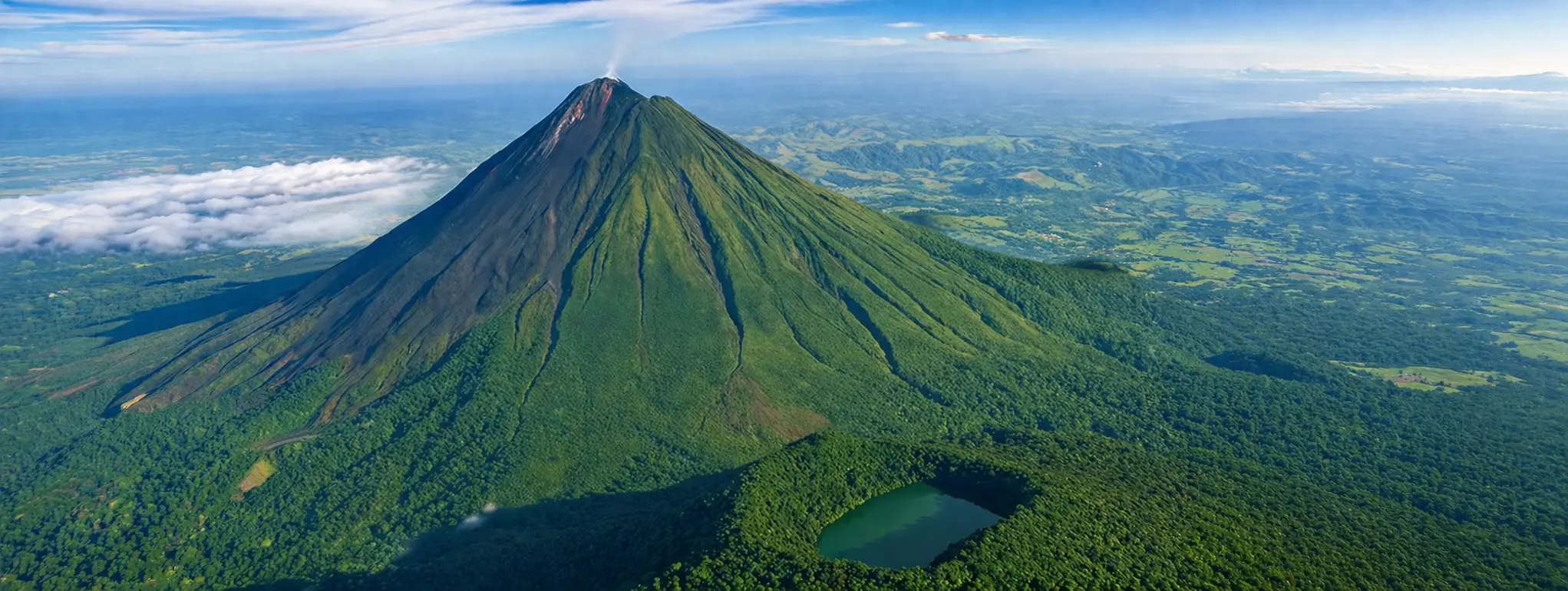
Today, Arenal stands as a reminder of the incredible power beneath the surface — both geological and human. The volcano will erupt again someday. Scientists monitor it constantly, and the community is far better prepared than it was in 1968. But in the meantime, it stands there, perfectly conical, often wrapped in clouds, watching over a town that owes its entire modern identity to one explosive morning nearly 60 years ago.
La Fortuna did not become a world-class destination despite the eruption. It became one because of it. The same force that destroyed also created — and the people of this town turned tragedy into something extraordinary.
Common Questions About Arenal & La Fortuna
When did the Arenal volcano erupt?
Arenal's catastrophic eruption began on July 29, 1968, after centuries of dormancy. It stayed active for decades before entering a quiet, resting phase in 2010.
Is the Arenal volcano still active?
Arenal is still classified as active but has been resting since 2010, with no lava or explosions. You can safely visit La Fortuna and see the iconic cone up close.
Why is La Fortuna a top destination in Costa Rica?
The 1968 eruption reshaped the region, and its geothermal heat created world-class natural hot springs. Today La Fortuna is Costa Rica's adventure capital - volcano hikes, waterfalls, hanging bridges and hot springs.
How do I get to La Fortuna?
Most travelers arrive by private shuttle from San Jose (SJO) airport, about 3 hours, or from Liberia (LIR), also around 3 hours. See our shuttle routes for door-to-door options.
Getting to La Fortuna
La Fortuna is approximately 130 kilometers from San Jose and 200 kilometers from Liberia. The drive from San Jose takes about 3 hours via the main highway through Ciudad Quesada (San Carlos). From Liberia, the route passes through Canas and Tilaran and takes roughly 3.5 hours. Many travelers also arrive from Monteverde via the famous jeep-boat-jeep transfer across Lake Arenal, which is an adventure in itself and takes about 3.5 hours including the scenic lake crossing.
Whether you are coming from the airport, the Pacific coast, or another destination in Costa Rica, we know these roads inside and out. Our drivers have been navigating the route to La Fortuna for years, and we make sure you arrive relaxed, informed, and ready to explore a town with one of the most incredible histories in all of Costa Rica.
Ready to explore La Fortuna and its volcanic history? Let us handle the drive so you can enjoy the journey.
Book Your Shuttle to La Fortuna