Everything for a Guanacaste trip - which airport (Liberia/LIR is closest to Tamarindo), the best beaches, dry vs green season, and how to get around.
Guanacaste is not just another province in Costa Rica — it is a world of its own. With its golden savannas, turquoise Pacific beaches, towering volcanoes and a culture rooted in cattle ranches and sabanero traditions, this northwestern corner of the country feels closer to the Mexican Pacific than to the rainforests of the Caribbean. If you are planning your first trip — or returning for more — here is everything you need to know about climate, the airport, the beaches, and the things that make Guanacaste truly special.
The Climate: Why Guanacaste Is Different From the Rest of Costa Rica
Most travelers picture Costa Rica as a green, rainy paradise. Guanacaste flips that idea on its head. This is the driest region in the country, with a tropical dry forest climate that gives it long sunny stretches, warm Pacific breezes and a landscape that turns golden during the high season.
Dry Season (December to April)
These are the months that built Guanacaste's reputation. Expect blue skies almost every day, very low humidity, average highs between 32°C and 35°C (90-95°F), and cool ocean breezes in the afternoon. Rain is rare, and when it shows up it is usually a quick shower at night. This is the most popular time to visit — and the most expensive.
Green Season (May to November)
Do not let the name scare you. Guanacaste's green season is far less rainy than the Caribbean or the Southern Pacific. Mornings are typically sunny, with afternoon showers that last one or two hours. The savanna explodes into deep green, waterfalls run full, and prices drop noticeably. For many returning travelers, this is the secret best time to visit.
Pro tip: September and October — considered the rainiest months in the rest of Costa Rica — are actually some of the most beautiful in Guanacaste. Fewer crowds, lush landscapes and the same warm Pacific water.
Liberia Airport (LIR): The Smartest Way Into the Pacific Coast
Daniel Oduber Quirós International Airport — known to everyone simply as LIR — is the gateway to Guanacaste. Located just 12 kilometers west of the city of Liberia, it is small, modern, easy to navigate and surrounded by some of the most beautiful beaches in Central America.
Why Fly Into Liberia Instead of San José
- You save 4 to 5 hours of driving compared to landing in San José (SJO).
- You skip the heavy traffic of the capital and the Central Valley mountains.
- Most Guanacaste hotels and resorts are between 20 minutes and 1.5 hours from LIR.
- Customs and immigration lines are usually shorter than in SJO.
- Direct flights from major US and Canadian hubs are increasing every year.
What to Expect When You Land
LIR has a single terminal with everything you need: ATMs, car rental desks, restaurants, a small duty free, and free Wi-Fi. After clearing immigration and picking up your bags, you walk straight outside to a covered open-air arrivals area where shuttles, taxis and rental car shuttles wait. There are no jet bridges in most cases — you walk down the stairs and into the warm Guanacaste air. It is one of the most welcoming arrivals in the region.
Important Things to Know
- Uber is not allowed to operate at the airport. Police actively monitor pickups.
- Pre-booking a private shuttle is the easiest, safest and often cheapest option for groups.
- ATMs dispense both colones and US dollars — most businesses accept both currencies.
- There is no public bus from inside the airport. The closest stop is on the main highway.
- If you arrive late at night, having transportation pre-arranged is highly recommended.
The Beaches: A Coastline for Every Kind of Traveler
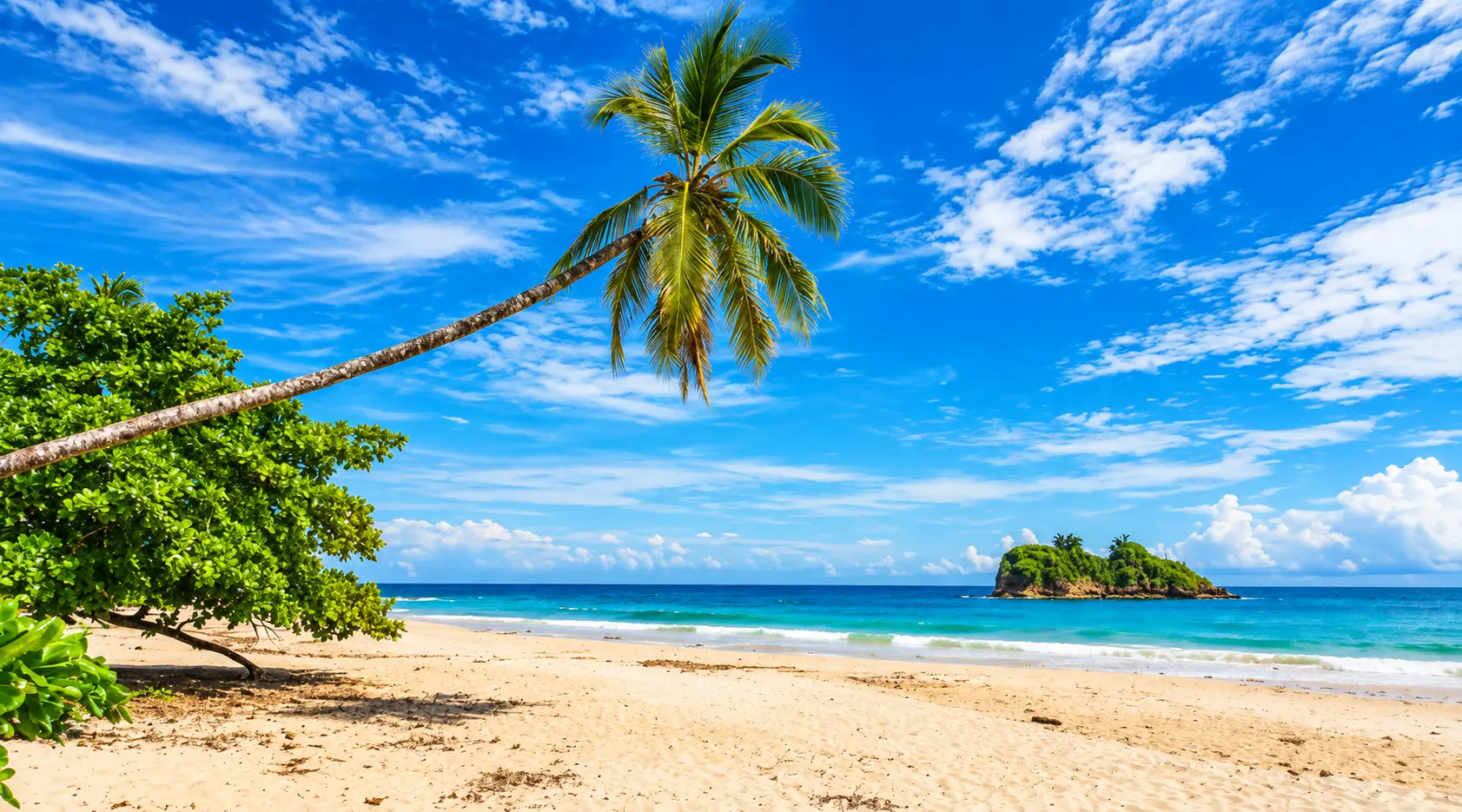
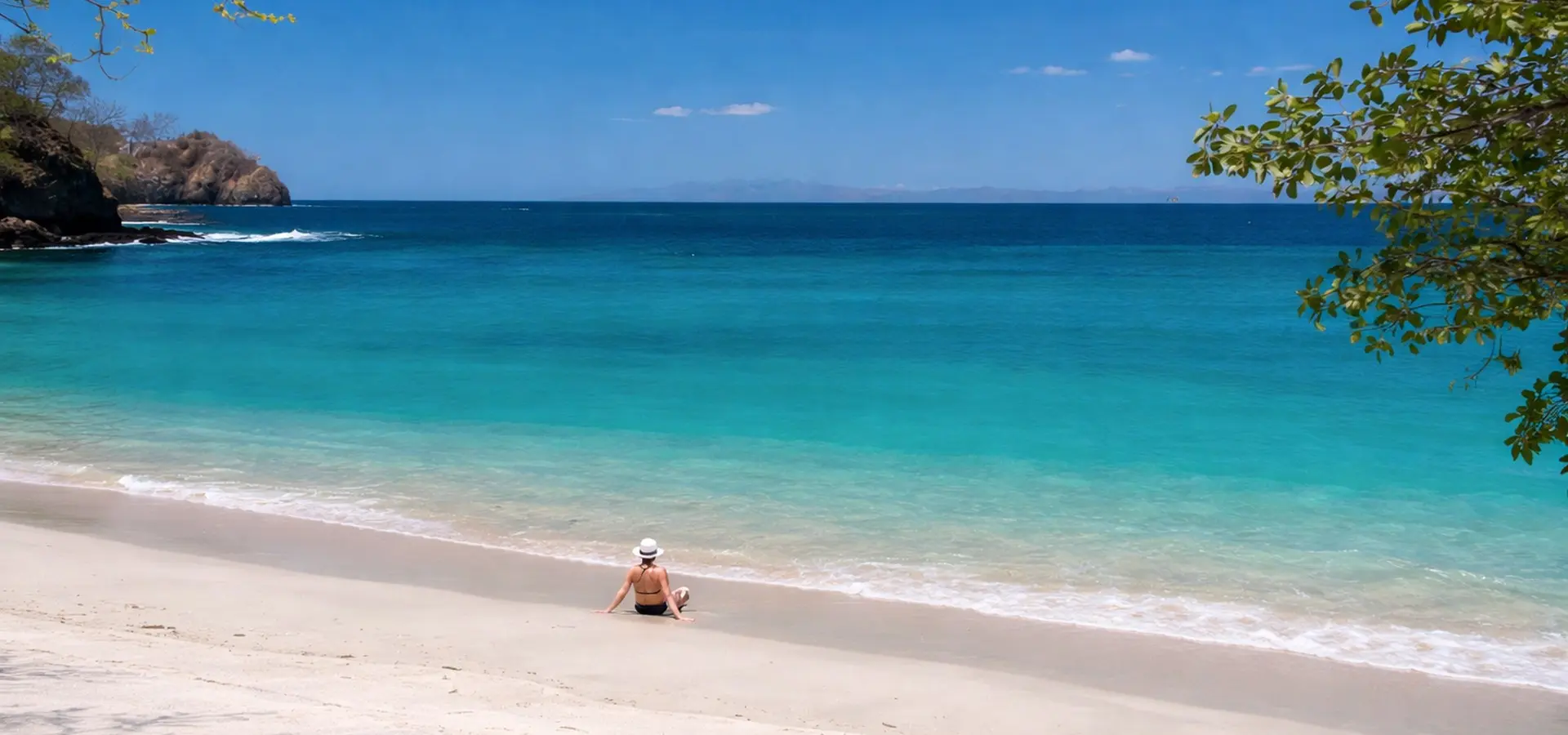
Guanacaste has more than 400 kilometers of coastline, and almost every cove, bay and stretch of sand has its own personality. Choosing the right beach is half the secret to a great trip.
Playas del Coco and Playa Hermosa
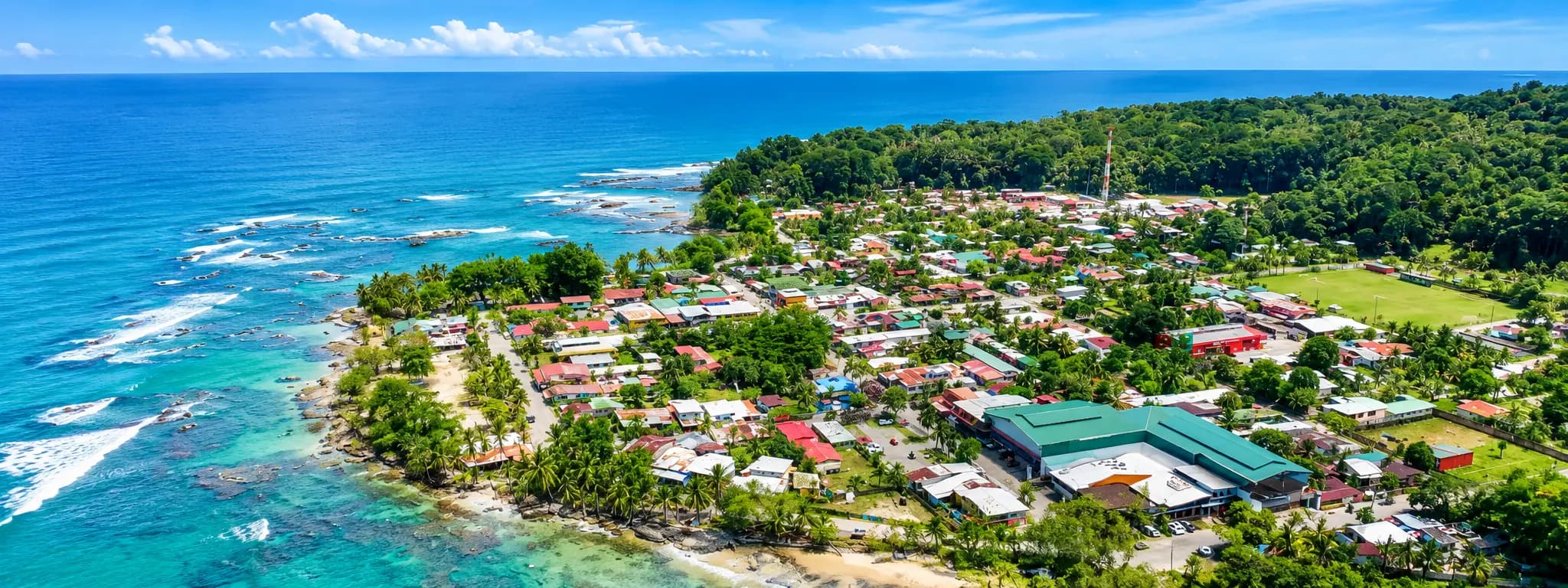
The closest beaches to Liberia Airport (about 25 minutes). Coco is a lively local town with a long dark-sand beach, plenty of restaurants and the most affordable nightlife in the region. Hermosa, just five minutes north, is calmer, with a beautiful crescent bay perfect for swimming and sunsets.
Papagayo Peninsula
Costa Rica's most exclusive resort area. Home to the Four Seasons, Andaz, Secrets, Planet Hollywood and the new Waldorf Astoria. Calm, protected waters and private beaches make it ideal for honeymoons, families and travelers who want full-service luxury.
Playa Conchal, Brasilito and Flamingo
Conchal is famous for its sand made of crushed seashells and crystal-clear water — one of the most beautiful beaches in the country. Flamingo offers white sand, a marina and excellent sunset views. Brasilito has a more local, low-key vibe.
Tamarindo and Playa Grande
Tamarindo is the most developed beach town in Guanacaste. Surf schools, beach bars, sushi spots and a strong international community. Across the estuary, Playa Grande is a protected nesting site for leatherback sea turtles and one of the best surf breaks in the region.
Avellanas, Negra and Junquillal
Quieter beaches loved by surfers and travelers who want fewer crowds. Avellanas became famous after appearing in Endless Summer II, and Playa Negra is one of the most consistent right-hand waves in Central America.
Nosara and Sámara
Further south, Nosara is the wellness capital of Costa Rica — yoga retreats, surf camps and a Blue Zone lifestyle that attracts long-stay visitors. Sámara, just an hour away, is calmer, more affordable and family-friendly, with a protected reef-fringed bay.
Beyond the Beach: What Else Makes Guanacaste Unique
The Sabanero Culture
Long before tourism arrived, Guanacaste was cowboy country. The sabaneros — Costa Rica's version of the cowboy — still ride horses through the savanna, run cattle ranches and host traditional rodeos called topes. Towns like Liberia, Santa Cruz and Nicoya are full of colonial architecture, white-washed churches and a slower, deeply traditional way of life.
Volcanoes and National Parks
Rincón de la Vieja National Park, just 45 minutes from Liberia, is one of the most underrated parks in Costa Rica. Active fumaroles, boiling mud pots, waterfalls and natural hot springs make it a perfect day trip. Santa Rosa National Park, further north, protects the largest tropical dry forest in Central America and the legendary surf break of Witch's Rock.
Nicoya: One of the World's Blue Zones
The Nicoya Peninsula is one of only five Blue Zones on Earth — regions where people regularly live past 100. The combination of sunshine, hard physical work, strong family ties, a calcium-rich water supply and a simple diet of rice, beans, corn, tropical fruit and fresh fish has made Nicoyans famous around the world for their longevity.
The Food You Have to Try
- Gallo pinto: rice and beans cooked together — the breakfast of Costa Rica.
- Casado: a balanced lunch plate with rice, beans, salad, plantains and protein.
- Chorreadas: sweet corn pancakes served with sour cream — a true Guanacaste classic.
- Olla de carne: a hearty beef and root vegetable stew, perfect for green season afternoons.
- Fresh ceviche: usually made with corvina or mahi-mahi, lime, onion and cilantro.
- Tamal asado: a sweet baked corn cake served with coffee.
Wildlife: Different From the Rest of Costa Rica
Because Guanacaste is dry forest rather than rainforest, the wildlife is different from what you see in Manuel Antonio or the Caribbean. You will not find sloths here — they need humid rainforest — but you will see howler monkeys, white-faced capuchins, iguanas, coatis, deer, scarlet macaws (in protected areas), hundreds of bird species, and an incredible variety of marine life including humpback whales between July and October.
Ready to discover Guanacaste? Book your private airport shuttle from Liberia (LIR) and start your trip the easy way.
Get Your Shuttle QuoteCommon Questions About Visiting Guanacaste
What is the closest airport to Tamarindo?
Liberia's Daniel Oduber International Airport (LIR) is the closest, about 1 hour to 1h15 from Tamarindo - far more convenient than San Jose (SJO), which is roughly 5 hours away.
Which airport should I fly into for Guanacaste?
Liberia (LIR). It sits at the top of Guanacaste, putting most Pacific beaches - Tamarindo, Papagayo, Flamingo, Nosara - within 30 minutes to 2 hours.
How far is Liberia airport from the Guanacaste beaches?
Playas del Coco and Papagayo are about 30-40 minutes, Tamarindo and Flamingo about 1 hour, and Nosara or Samara around 2 to 2.5 hours.
When is the best time to visit Guanacaste?
The dry season (December to April) has the most sun and is peak season. The green season (May to November) is quieter, greener and cheaper, with short afternoon rains.
Quick Tips Before You Travel
- Book your airport transfer in advance — especially during high season and US holidays.
- Bring reef-safe sunscreen. The Guanacaste sun is intense, even on cloudy days.
- Carry small bills in colones or US dollars for tips, sodas and small beach towns.
- Download offline maps before you leave the airport — signal can be weak on coastal roads.
- Pack light, breathable clothing, a swimsuit you can wear all day, and a light rain jacket if you visit in green season.
- Learn a few words in Spanish — Guanacastecos are warm, proud and love when visitors try.
Guanacaste is the kind of place that surprises you. You arrive expecting beautiful beaches — and you leave with stories of cowboys, volcanoes, family-run restaurants, sunsets that turn the sky pink, and a feeling that life can actually be slower, warmer and simpler. That is the real Pura Vida. And it starts the moment you land in Liberia.